
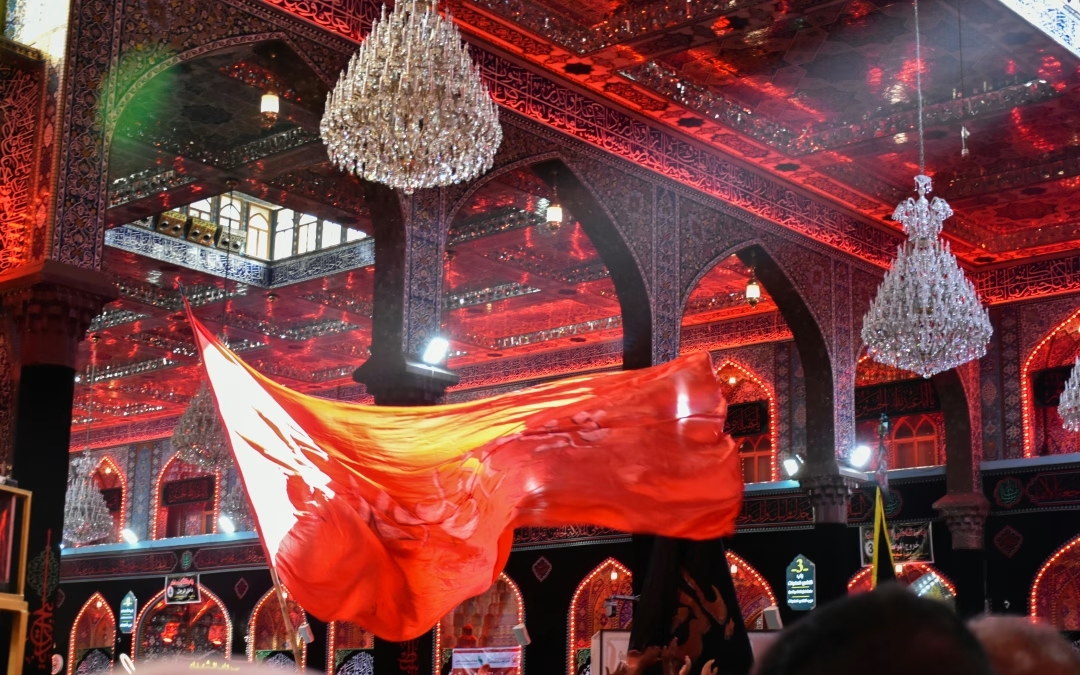
Love is at the core of faith.
There is a Ḥadīth by Imām Ja‘far al-Ṣādiq (عَلَيْهِ السَّلٰام) that says, “Is religion anything other than love?” Similarly, Imām Bāqir (عَلَيْهِ السَّلٰام) says, “Love is faith and faith is love.”
When we think of love, we often come across the concept of love languages. The 5 Love Languages was written by Baptist pastor Gary Chapman, who explains that people show and receive love in different ways—ways that vary from person to person. This can be shaped by how we were raised, how our parents showed love, or even how we didn’t receive love.
The Five Love Languages Are:
- Acts of Service
- Physical Touch
- Words of Affirmation
- Gift Giving
- Quality Time
Although this theory isn’t evidence-based, many people find it relatable and use it meaningfully in their daily lives. Love languages aren’t limited to romantic relationships—they can be applied to friendships, parenting, relationships with parents, and even our connection to God and the Ahlul Bayt (عَلَيْهِ السَّلٰام).
And in the month of Muḥarram—a month filled with immense grief but also profound love—we see each of these love languages emerge in powerful ways.
Acts of Service
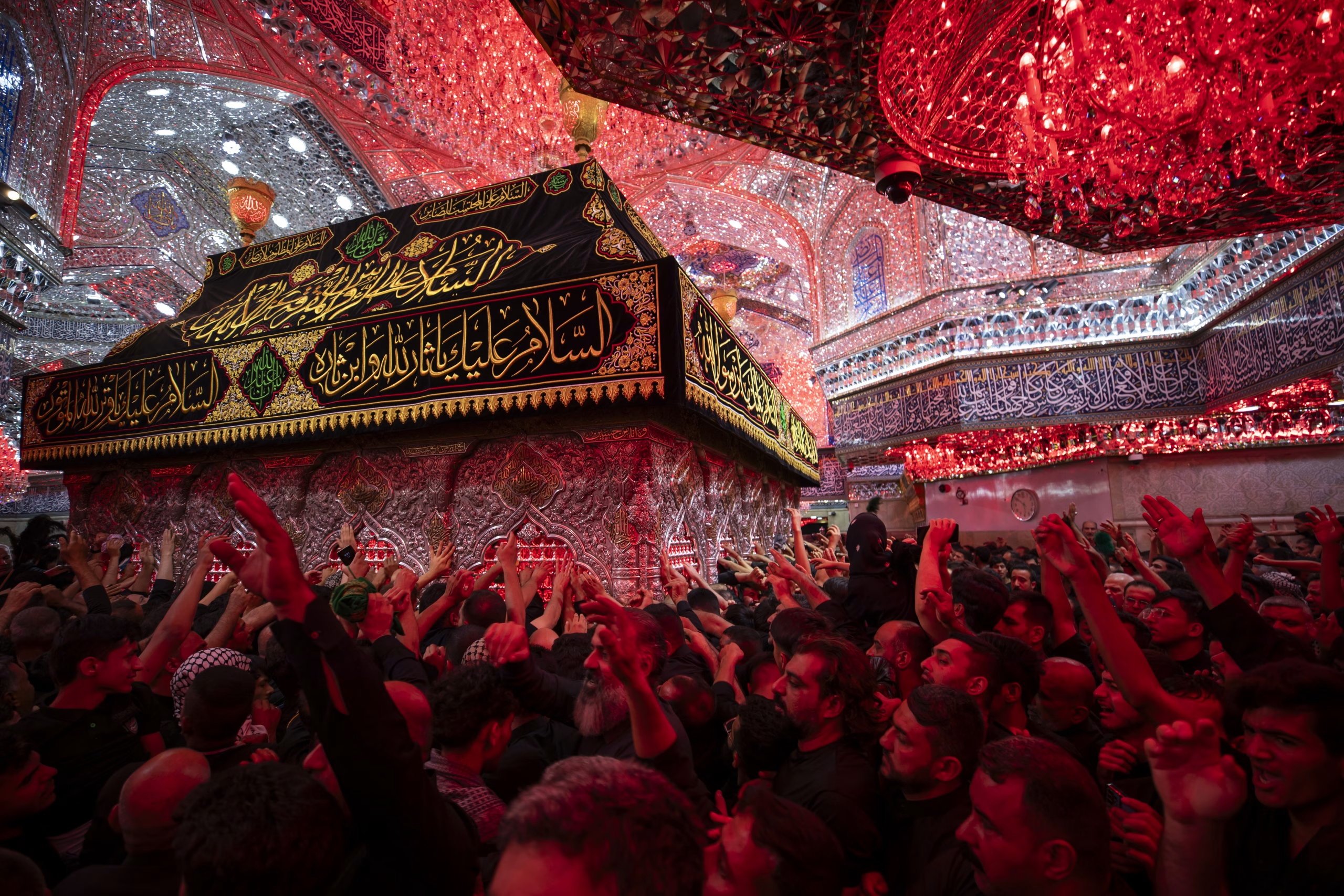
Throughout the month, you’ll see people eager to serve. They open their homes for majālis, distribute the best of foods as tabarruk, and volunteer passionately at the Masjid and Imāmbargah—cleaning, preparing, making space.
And when we think of the journey of love, look at the `Arba’īn walk from Najaf to Karbala. You’ll find people crying and begging for the opportunity to serve the Zā`irīn of Abā ‘Abdillāh. This is the most powerful yet beautiful representation of acts of service.
This is how some people express their love for Imām Ḥussain: through service. They may even sacrifice their own Azadari (mourning) to serve others. Consider those who forgo the walk to Karbala just to serve the walkers—this is love in action.
In these acts of service, something beautiful happens. You elevate your purpose to a higher meaning. This activates the reward center of your brain, releasing feel-good chemicals, balancing cortisol, and bringing a sense of peace, self-worth, and love.
It increases empathy and strengthens bonds with your brothers and sisters.
When you connect to a higher purpose, your motivation for life increases—especially when your love is preparing you for the Ākhirah, done purely for the sake of Allah (swt), and for the love of Ḥusayn.

Physical Touch
Physical touch in this context appears in sacred rituals:
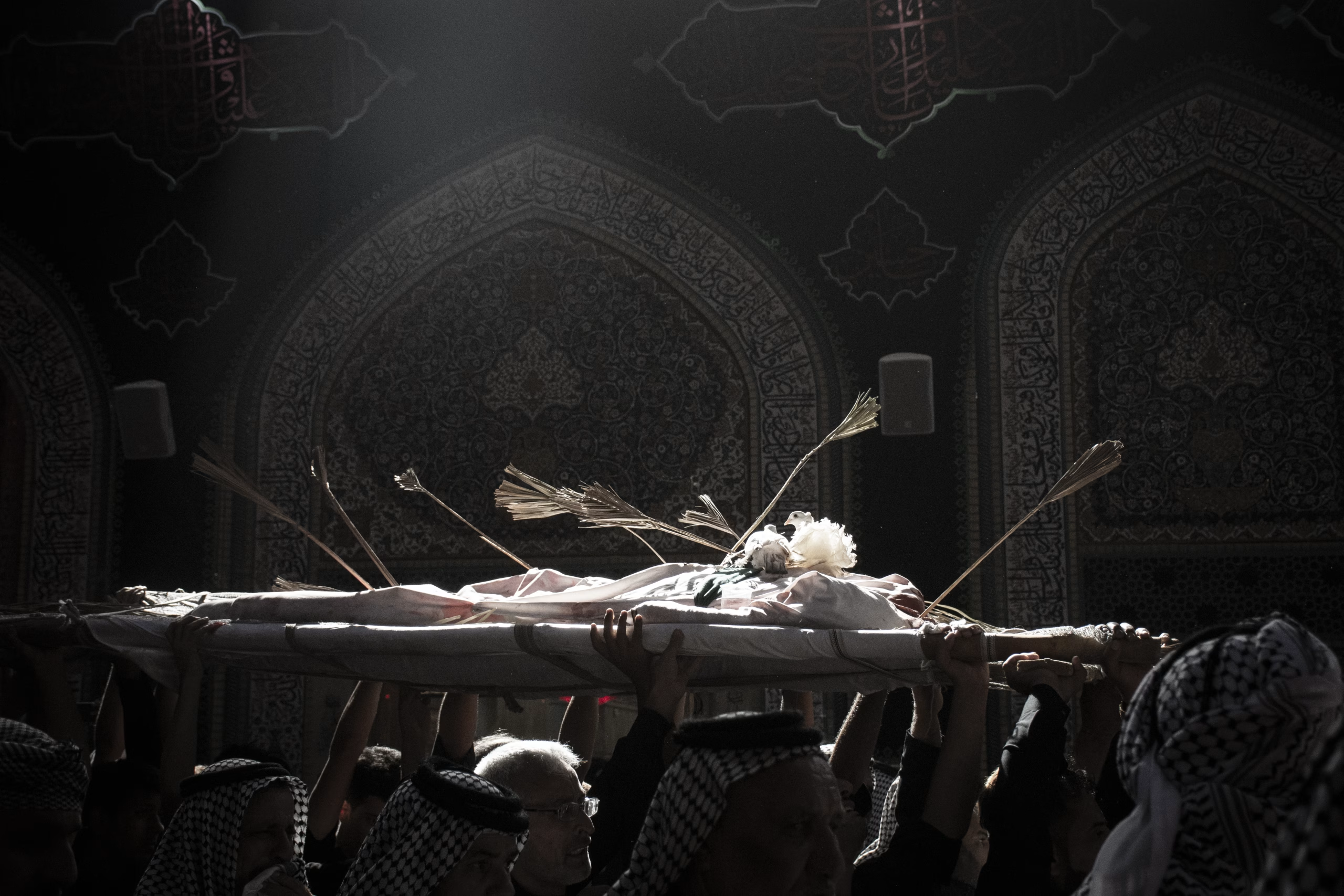
Handling the ‘Alam and Tābūt — this is an act of deep reverence. There are rituals around cleaning them, carefully bringing them out, kissing them, rushing to carry them. These are physical declarations of love and connection.
During Ziyārah, some will endure crowds and hardship just to reach the Ḍarīḥ—to physically touch it, hold it, and send their Salāms. That physical connection symbolizes profound love.
Another form of physical touch is Mātam/Laṭam or the act of beating your chest in lamentation.
Matam isn’t just symbolic or cathartic—it’s also deeply self-soothing.
Dr. Bruce Perry says we need “patterned, repetitive, rhythmic somatosensory activity,” especially when processing trauma and returning to a regulated state.
So here we are: listening to heartbreaking stories, feeling deeply, crying—and then comes matam. A rhythmic, repetitive, somatic practice to help us process and soothe.
Think of a baby: a mother instinctively pats or rocks her child to calm them. Matam functions similarly for our hearts and bodies.
For some who can’t cry openly, matam becomes a way to release that emotional weight. And for younger boys especially, the active, communal aspect can create a deep sense of belonging and identity.
Words of Affirmation
This one’s familiar—it’s the poetry we recite, the speeches we hear, the Maṣā`ib that move us, the chants of Labbayk we call out.
You know those people who can’t help but say SubhanAllah during a lecture or shout Naara-e-Haydari? That’s a love language.
This also includes affirming that these tears are a promise from God—to Sayyidah Fāṭimah (عليها السلام).
It’s about affirming that we’re on the path of light, that we’re connected not only to generations of azadars (mourners), but to the original azadars—Imām Sajjād (عَلَيْهِ السَّلٰام) and Sayyidah Zainab (عليها السلام).
Gifts
These are the tabarrukāt we bring back from Ziyārah or distribute during the majālis.
It’s the nazar and niyāz—giving for the sake of Imām Hussain (عَلَيْهِ السَّلٰام), gifting something sacred in this sacred month.
Quality Time
For a lot of people, their entire social lives shift during these months.
They spend all their time—or as much as possible—attending Majālis. That’s how many of us show love.
For people whose love language is quality time, they don’t want their weekends to feel “normal.” The months of Muḥarram and Safar should feel different.
Majālis surround our days: we wake up and get ready, we leave for the day, we eat tabarruk for all our meals, and we come home and sleep.
Love and Belonging
These love languages may be similar to how we show love to others—but with others, we may or may not receive love in return. However when we show love to the Ahlul-Bayt (عَلَيْهِمُ السَّلٰام), we receive more than we give.
The majālis we attend is a university—we hear that a lot—but it truly is a space for growth and perception.
The love you pour out this month comes back to you tenfold. It helps you become a better person: more grounded, more self-assured, more connected to your community and it gives you a sense of belonging.
Because of Muḥarram, we feel part of something greater.
We feel elevated, secure in our identity, and deeply loved.
Tears that Build Chambers: ʿAzāʾ, Communal Mourning, and the Grief the Clinic Forgot How to Honor
Introduction: The Grief That Will Not Be Scheduled It is two in the morning, three years after the funeral, and you are crying again. And somewhere beneath the grief is a second, more corrosive feeling: the suspicion that something is wrong with you for still grieving...
Muwāsāt: The Therapy of Being-With — Presence, Co-Regulation, and the Night of ʿĀshūrāʾ
Introduction: When There Is Nothing to Fix There is a particular hour that brings people to my consulting room, even when they arrive at it during the day. It is the hour, often around two in the morning, when a person sits on the floor of a bathroom or at the edge of...

Rebuilding What Cannot Be Rebuilt: Post-Traumatic Growth and the Community of Remembrance
Part 3 of 3 | The Graves They Could Not Bury: Islamic Psychology of Sacred Grief on Yawmul Ghamm Introduction: Can a Community Grow from a Wound That Remains Open? In the first post of this series, I named the grief: disenfranchised, morally injurious, and ongoing....