

Of late, I have felt disconnected from Allah (swt), from prayer, from family, and from myself. I write this not because I feel defeated, but because at some point, everyone faces this kind of exhaustion.
In the South Asian Muslim community, religious burnout is often dismissed as “having weak īmān (faith)” or it is blamed entirely on waswasah (whispers of the devil). While these may play a role, they do not capture the full picture. Burnout is, at its core, a state of emotional, mental, and physical exhaustion rooted in prolonged stress. Psychologists describe it through three dimensions:
- Exhaustion
- Depersonalization
- Reduced efficacy
From a neuropsychological perspective, burnout reflects dysregulation in the HPA axis—the body’s stress system. The prefrontal cortex (focus, decision-making) becomes less effective, while the amygdala (our “threat detector”) is overactivated. Over time, even the brain’s reward pathways shift: acts that once felt meaningful can begin to feel heavy or unrewarding.
This lens makes religious burnout particularly sensitive. It may look like struggling to find joy or fulfillment in prayer, feeling guilty for not doing enough, or seeing worship as a burden. Psychologists sometimes call this spiritual fatigue—a deep sense of disconnect from practices that once grounded us. Neuroscience shows us that the brain’s reward system (the dopamine pathways) may shift so that ritual acts no longer feel comforting, but instead stressful—especially if worship is framed only around fear, obligation, or an unattainable standard of perfection.

But Islam has already spoken to this human reality. Allah (swt) reminds us: “Allah does not task any soul beyond its capacity”. And again: “Allah desires ease for you, and He does not desire hardship for you…”. Worship was never meant to break us—it was meant to nurture us. If He (swt) intends ease, why do we burden ourselves with perfectionism?
Perhaps the hardest part of religious burnout is the guilt and hopelessness that come with it. In those moments, Allah (swt) addresses us directly: “Do not despair of the mercy of Allah. Indeed, Allah will forgive all sins” This is not only a reassurance of Allah’s greatness and mercy, but also a cognitive reframing—a gentle reminder to shift our mental focus from despair to hope.
This is where psychology and faith meet. Burnout often warps our thinking into “all-or-nothing” patterns: If I can’t pray with focus, I must be a bad believer. In clinical psychology, this is called cognitive distortion, and it’s one of the strongest predictors of emotional exhaustion. Yet our tradition offers an antidote. The Prophet (ṣ)cautioned against excess and reminded us that Allah (swt) loves consistency, even if small—what psychologists today would describe as pacing oneself and practicing self-compassion.
Imām ʿAlī (ʿa) reminds us in Nahj al-Balāghah that the heart, like the body, can grow weary — teaching us the importance of balance and renewal in worship and life. Imām aṣ-Ṣādiq (ʿa) emphasized that worship should be consistent, even if small, for it is sincerity that matters, not overwhelming ourselves with more than we can sustain. Imām Ṣādiq (‘a) said: Continuous but small actions [performed] with conviction are better in the sight of Allah than numerous actions without conviction.’ Supplications such as Duʿāʾ Kumayl or Duʿāʾ Iftitāḥ give us a way to hold our fatigue, guilt, and longing all at once, embodying the rhythm of the believer’s heart in moments of both distance and closeness.

So how can we cope with religious burnout? A few ways:
One way forward is through self-compassion. Instead of reading burnout as weakness, we can treat it as a signal that the mind and body are asking for care. This softens guilt and makes space for healing.
Another path is mind-body regulation. Practices like deep breathing, grounding exercises, or mindful dhikr calm the stress system, giving the heart and brain room to rest.
Finally, worship itself can be reimagined in micro-steps. Just as psychologists suggest breaking down overwhelming tasks, prayer can be softened into smaller, sincere acts—like two rakʿats with full presence or a whispered duʿāʾ. In time, the brain learns to link worship with peace rather than pressure.
Religious burnout is real. It is psychological, neuropsychological, and deeply spiritual. But it is not the end of faith. It is often the heart’s way of saying it needs gentleness, not harshness. Imām ʿAlī (ʿa) said: “Hearts become weary, just as bodies become weary. So, seek for them beautiful expressions of wisdom.” In that light, burnout does not mean faith has failed. It is a very human reminder to soften with ourselves, to trust that Allah (swt) intends ease, and to rediscover worship not as a burden, but as a balm.

Will Ai Replace Therapy?
With AI entering every piece of software and many aspects of daily life, the question of whether it will replace our jobs is front and center. AI is being seen as taking over different roles, and the push to use it is spreading across industries. Although there are...

Intimate Partner Violence – From Hopelessness to a Profound Connection to Allah (swt)
Introduction Intimate partner violence (IPV) affects millions of people annually on a global scale. Globally, the World Health Organization (WHO) estimates that about 1 in 3 (30%) women worldwide experience either physical and/or sexual intimate partner violence or...
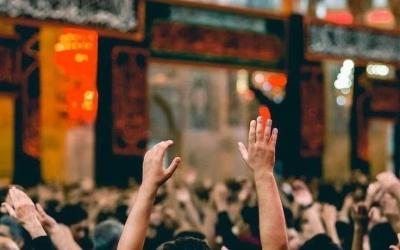
Tears that Build Chambers: ʿAzāʾ, Communal Mourning, and the Grief the Clinic Forgot How to Honor
Introduction: The Grief That Will Not Be Scheduled It is two in the morning, three years after the funeral, and you are crying again. And somewhere beneath the grief is a second, more corrosive feeling: the suspicion that something is wrong with you for still grieving...
Related reading
- Reflective Practices in Trying Times
- The Silence of Rizq
- Forgiveness & The Brain: Letting Go Without Forgetting
Working with Kisa Therapy Clinic
If you would like to explore this with someone who shares your frame of reference, our therapists offer faith-integrated therapy online across Ontario and select US states.
Book a free 15-minute consultation · Meet our therapists · See our services