
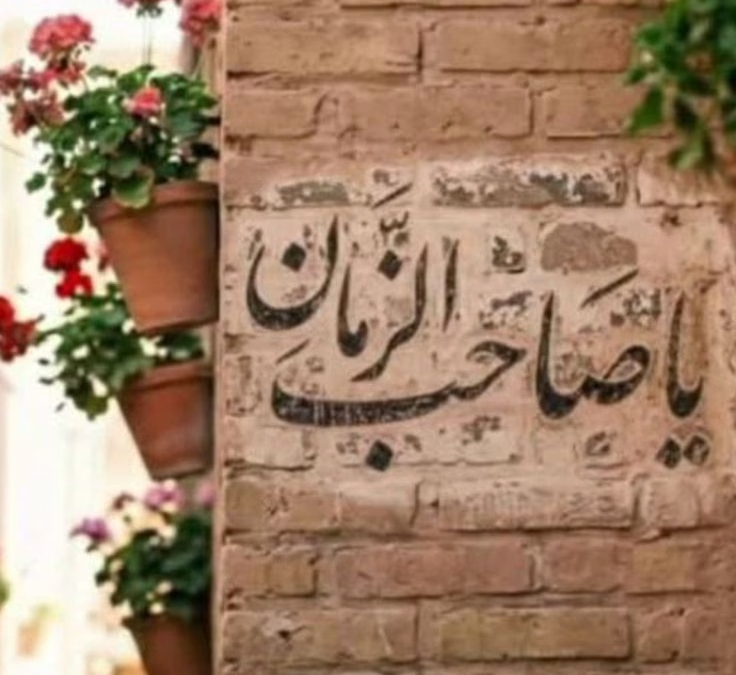
I’m driving to the mosque. My newborn is in the back seat. I want to attend the program, then visit family afterward, then maybe fit in some reading time before the next event. And somewhere in the middle of planning all this activity, a question stops me: Am I chasing religiosity right now? Am I trying to make sure I’ve “done enough”? Or am I actually seeking connection?
That question has haunted me through Rajab, Shaʿbān, and Shahr Ramaḍān this year. Because here’s what I’ve learned about myself during this season: It’s easier for me to be busy with religious activity than to be present for genuine connection.
I wrote about Rajab as the month of cleaning the mirror. Shaʿbān as reconnecting to Imām Mahdī (ʿaj). Ramaḍān as transformation. And intellectually, I understand the framework. I can articulate why these months work together, how the practices build on each other, and what the progression is designed to accomplish.
But understanding a framework and living it are different things.
I can check all the boxes, attend all the programs, do all the recommended supplications, and still miss the actual connection I’m supposedly there for. The hardest part isn’t the practices themselves—it’s staying present for them. It’s showing up with genuine intention rather than religious performance.
Before every client session, I try to connect with Allah (swt) and our Imāms (ʿa) and ask for support in supporting the vulnerable person. And sometimes—especially during these three months when I’m supposed to feel closer, more connected—I feel the absence more acutely than the presence. I want Imām Mahdī (ʿaj) here, physically, where I can see him. Where I know he’s present. That longing, that severe desire for physical presence, hits hardest when I’m alone, and I need help, and there’s no one to turn to but him.
I know that metaphysical presence is real. The Imām (ʿaj) is present even when I feel his absence. But knowing that doesn’t always make the longing go away.
I’m still learning what genuine connection looks like versus religious busyness. I’m still sitting with the tension between physical absence and metaphysical presence. And I’m still trying to figure out how to be present during these months—truly present—not just busy.
There’s still a lot for me to grow. I still need to use these seasons more intentionally. Writing this series has been a mirror. And sometimes what I see reflected is that I’m still figuring this out. I’m not living up to the framework I wrote about. I’m living that gap between knowing and doing every single day.
I don’t know if that makes me less qualified to have written this series or more honest about what the journey actually looks like. But I do know this: I didn’t write it because I’ve mastered these months. I wrote it because I needed to remind myself why they matter. I needed to articulate the framework so I could hold myself accountable to actually living it, not just knowing it.
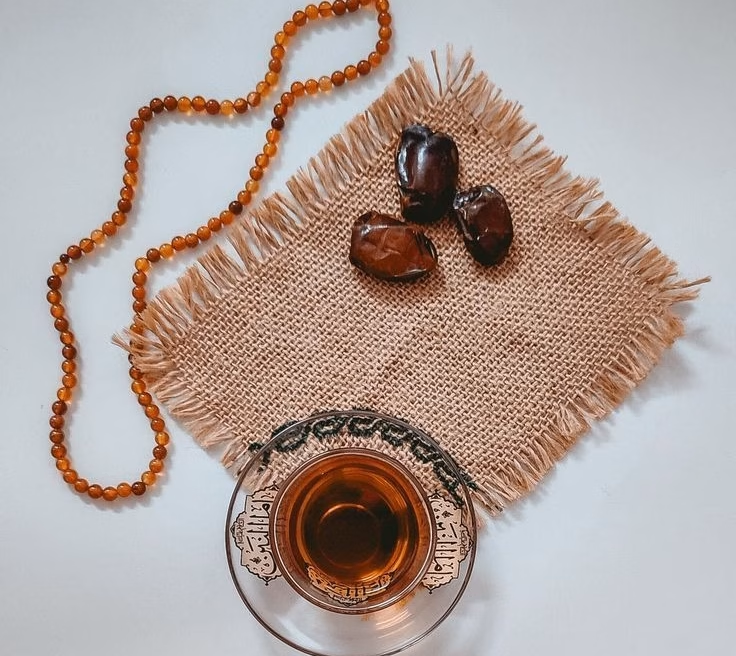
If you’re reading this and you’re struggling—if you’re asking yourself the same questions I’m asking—maybe that’s the point. Maybe the season isn’t meant to make us feel like we’ve arrived. Maybe it’s meant to show us where we still need healing, where we still need connection, and where we still need help.
The Imām (ʿaj) is present even when I can’t see him. The opportunity for healing exists even when I feel distant. And Allah’s mercy is always available. I know these things intellectually. I wrote them in this series.
But knowing them and living them are different. And this season keeps reminding me of that gap. Not to condemn me for it, I hope, but to invite me to keep trying. To keep showing up. To keep seeking genuine connection even when religious activity feels easier.
The season will come again. Another Rajab. Another Shaʿbān. Another Ramaḍān. Another chance to clean the mirror, reconnect, transform. That’s the mercy in it—we get to try again. We get another invitation. And maybe next year, I’ll be a little closer to bridging that gap between knowing and living.
But for now, I’m still in it. Still learning. Still struggling. And still grateful for the season that keeps holding up the mirror, even when what I see reflected back isn’t what I hoped it would be.
May these months be a source of healing for all of us—not because we’ve perfected them, but because we keep showing up to them.
Clinical Note
If you’re experiencing significant mental health challenges—depression, anxiety, trauma, grief—please seek professional support. Spiritual practices are powerful and meaningful, but they’re not a replacement for clinical treatment when clinical treatment is needed.
If you need help finding a culturally competent Muslim mental health provider, Kisa Therapy Clinic offers services across Canada and the US.
About the Author
Ali Raza Hasan Ali, MSW, RSW, is Clinical Director at Kisa Therapy Clinic, a faith-integrated mental health practice serving Muslim communities.
Tears that Build Chambers: ʿAzāʾ, Communal Mourning, and the Grief the Clinic Forgot How to Honor
Introduction: The Grief That Will Not Be Scheduled It is two in the morning, three years after the funeral, and you are crying again. And somewhere beneath the grief is a second, more corrosive feeling: the suspicion that something is wrong with you for still grieving...
Muwāsāt: The Therapy of Being-With — Presence, Co-Regulation, and the Night of ʿĀshūrāʾ
Introduction: When There Is Nothing to Fix There is a particular hour that brings people to my consulting room, even when they arrive at it during the day. It is the hour, often around two in the morning, when a person sits on the floor of a bathroom or at the edge of...

Rebuilding What Cannot Be Rebuilt: Post-Traumatic Growth and the Community of Remembrance
Part 3 of 3 | The Graves They Could Not Bury: Islamic Psychology of Sacred Grief on Yawmul Ghamm Introduction: Can a Community Grow from a Wound That Remains Open? In the first post of this series, I named the grief: disenfranchised, morally injurious, and ongoing....